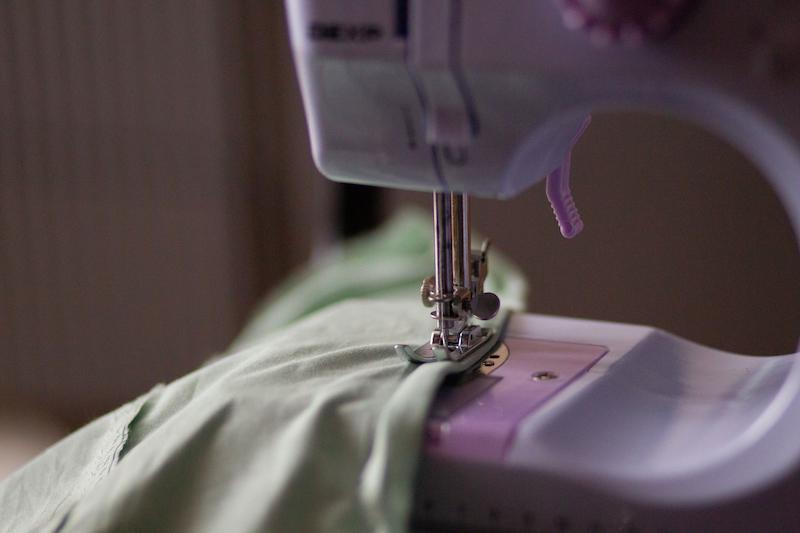
In the manufacture of clothing, a seam is more than just a row of stitches used to hold two pieces of cloth together. Strong, flexible, aesthetically pleasing, comfortable and durable, it’s a carefully balanced construction. There are three key components that come together to create a good seam: thread, type of stitches, and fabric.
If any of these elements is chosen independently, it could result in issues. An apt combination of fabric and thread can fail even if a strong thread is used, and a weak thread can destroy a fine fabric. To design a system for sewing garments properly, therefore, manufacturers must evaluate the entire sewing system of garments, and they must also learn how each component of the sewing system affects others.
Understanding Garment Seam Engineering
Garment seam engineering is the seamless process of designing and optimising seams as per the functional requirements of a garment. Seams will vary depending on the product requirement.
For instance, while a seam will need to stretch and move repeatedly for want-on-fitting in sportswear, it will need to be abrasion and tensile resistant for workwear (meta-aramid sewing thread). While luxury clothes might be more concerned with cleanliness and comfort, protective clothing might need to withstand heat, chemicals or other environmental factors.
Seam engineering considerations are:
- Designing fabric construction and thickness
- Thread fibre and size
- Stitch type and density
- Seam allowance
- Needle size and point
- Sewing speed
- Thread tension
- Garment use and exposures to the environment
The goal is to develop a seam that will stand up to the demands of the items that will be made without adding any excessive use of materials or over-costing of production.
The Role of Fabric
The seam system is built on fabric. They depend on the type of fibre used, the way it’s woven or knitted, its weight, its stretch and recovery qualities, and the surface properties.
Usually woven fabrics exhibit different seams as compared to knitted fabrics. When choosing the materials, lightweight fabrics can become damaged by needles and puckered, and heavier fabrics might need thicker threads and larger needles.
Fabrics with a stretch factor are also difficult. If there is no room to let the fabric slide, repeated stretching can lead to the tearing of the thread or the seam.
Manufacturers need to consider fabric characteristics before the product, including:
- Tensile strength
- Tear strength
- Stretch and recovery
- Thickness
- Abrasion resistance
- Shrinkage
- Sensitivity to needle penetration
Knowing these characteristics assists in choosing the right thread and stitch properties by the engineer.
Choosing the Right Thread
The fabric parts are connected to one another through Threads. There is a close relationship between its strength, elongation, abrasion resistance and construction, and on this basis, it produces a good seam.
- Polyester Thread: Because of the fibre’s excellent tensile strength, abrasion resistance, dimensional stability and resistance to many chemicals, polyester corespun thread is widely used. Appropriate for use in a wide variety of applications, such as uniforms, workwear, sportswear, clothing, etc.
- Nylon Thread: Nylon thread provides high strength and flexibility and can be useful in applications where dynamic movement and abrasion resistance are important.
- Natural Fibre: A natural fibre may be chosen if a natural fibre is preferred, or if a special appearance is wanted; cotton thread may be chosen. But it has different performance qualities than synthetic threads and should be taken into account based on the use.
The size of the thread is also significant. If too thin, the seam will likely not have proper strength; if too thick, the seam will be voluminous, the needle and machine demands will increase, and it will be likely to make the seam look unappealing.
Why Stitch Type Matters
Stitch type affects how the thread interacts with the fabric and how loads are transferred along the seam.
Each of the stitch classes is crafted for its specific intended purpose. Lockstitch constructions are typically employed in situations where a precise and stable seam is needed. Chain and overedging stitches can give flexibility and are popular when fabric must stretch, as in clothing.
Stitch constructions that allow fabric to hold up the material to the same extent are especially crucial for stretch garments. On the other hand, there are structured garments which focus on just how they will or won’t look and also dimensional stability.
To this end, the inserted stitch must not only be compatible with the fabric but also with the use of the garment.
Thread, Stitch, and Fabric Must Be Balanced
Seam engineering runs on the principle that there can be no optimisation of thread, stitch type and fabric separately.
Think about using a lightweight stretch material. A very strong but relatively stiff thread with stiff stitch construction may limit fabric motion and add to the stress of the seams. A looser thread can result in greater performance with a suitable stitch and one that can stretch.
Likewise, if an application has heavy workwear fabric, a high-tension thread could be necessary, and a strong stitch construction could be used that could support heavy loads.
The interaction can be summarised as:
Fabric properties → determine required seam behaviour → influence thread and stitch selection → machine settings complete the system.
By this method, manufacturers can prevent issues arising from component selection without considering compatibility.
Testing and Quality Control
Systematic testing should be used to support seamless engineering. Manufacturers should test seams in a situation similar to how the product would be used in garments.
Common evaluations include:
- Seam tensile strength
- Seam slippage
- Stretch and recovery
- Abrasion resistance
- Appearance after washing
- Colorfastness
- Repeated flexing
- Dimensional stability
Testing post-wash and wear is important for performance garments, as this offers valuable detail into extended seam durability.
Production teams should also track the first-pass yield and defects and look for any repeating issues. A solution that is solving a particular seam issue every time should focus the solution not merely on mending a garment but on addressing the root cause.
Improving Efficiency Through Seam Engineering
Seam engineering can not only help to enhance the quality of the products, but it could also help to enhance the efficiency of manufacturing. Appropriate thread, stitch density, and machine setup can minimize thread breakage, rework, machine downtime, and material waste.
Manufacturers can identify general sewing parameters applicable to types of fabrics and develop approved ways of using thread, needles, stitch types, and machine parameters.
Consistency can be further improved through automation. Computer-driven sewing machines can keep stitches in place and in proper density, and digital production monitoring can aid in the detection of machine and batch variations.
Sustainability Considerations
Seam engineering also plays an important part in the field of sustainability. Optimized stitching can help save thread usage and minimize the risk of damage to the fabrics and decrease rework, as well as increase garment life.
A good seam makes clothing more useful for a longer time and therefore reduces the frequency with which it will need to be replaced. Especially so, because the manufacturers are increasingly using recycled and alternative fabrics.
Sustainable garment production should thus take into account where the fabric is cut together, how the fabric is seamed, and the lifespan of the garment.
Conclusion
The basic principles of garment seam engineering are harmony of thread, type of seam, and fabric. All combine to affect seam strength, flexibility, appearance, comfort, and durability and can best be tested as part of a system.
The right thread will not overcome an incompatible stitch, and the right stitch will not overcome an incompatible fabric. Factors to take into account are the properties of the materials, the construction of the machine thread, the density of stitches, the selection of needles, needs, and the matters at hand.
By taking the above cost-effective approaches such as systematic testing, standardized sewing parameters, preventive maintenance, and material-specific seam design, garment manufacturers can lessen garment defects and simultaneously increase productivity and product quality.